
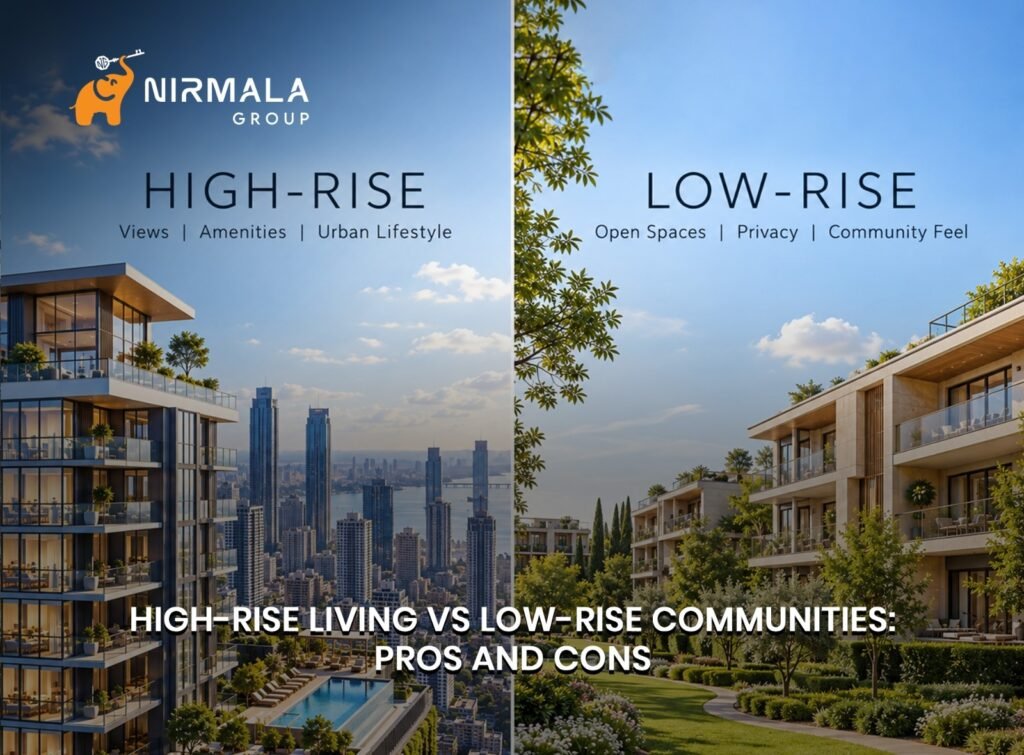
What High-Rise Living Offers
Living on the 10th floor or higher means trading square footage for elevation. You get views, usually better security, and proximity to city amenities. Here’s what actually comes with that:
The upsides:
- City views and natural light from multiple angles
- Better ventilation and air quality (you’re above street-level pollution)
- More amenities shared across residents—gyms, pools, concierge services
- Built-in security with 24/7 guards, CCTV, and restricted access
- Walkable to restaurants, offices, shopping; most errands are a quick trip
- Lower maintenance—no compound upkeep falls on you individually
- Resale value often holds steady in established high-rise complexes
The tradeoffs:
- Elevator dependency (power outages become real obstacles)
- Limited outdoor space—maybe a small balcony
- Noise from neighbors traveling through shared walls and corridors
- Parking is often underground or paid separately
- Moving in/out is a production—elevators, hallways, coordination
- Less privacy—shared lobbies mean you see neighbors constantly
- Kids playing is confined to designated areas or the rooftop
What Low-Rise Communities Provide
Low-rise means 2-4 stories, typically villas or townhouses. You get ground-level access, more open space, and the ability to customize your surroundings. It’s a different creature altogether.
The upsides:
- Direct outdoor access—garden, terrace, yard
- Your own parking; no hunting for spots
- No elevator—freedom from that dependency
- Better sound insulation (fewer shared walls)
- Privacy—you control who enters your space
- Room for kids and pets without restrictions
- Flexibility to renovate or plant without committee approval
- Quieter mornings; you’re not hearing footsteps from above
The tradeoffs:
- Your responsibility for maintenance—compound upkeep, garden care, repairs
- Less shared security infrastructure (depends on community gates/guards)
- Fewer amenities unless the community is planned with shared facilities
- Longer distances to shops, offices, hospitals (car-dependent in most areas)
- Resale depends heavily on location and individual property condition
- Less natural protection from weather (flooding, storms hit ground level first)
- Property taxes often higher (land component is significant)
Who Thrives in High-Rise Living
High-rise vs low-rise apartments really comes down to lifestyle. High-rises work best if you:
- Work in the city center and want short commutes
- Have minimal gardening interest
- Don’t own pets or have one small dog
- Value security and built-in community
- Prefer low maintenance and predictable costs
- Like urban energy and walkable neighborhoods
Young professionals, married couples without kids, and seniors often find high-rise living practical. The tradeoff of space for location usually works in their favor.
Who Thrives in Low-Rise Communities
Low-rise living suits you if you:
- Have kids who need outdoor play space
- Own dogs or multiple pets
- Care about gardening, landscaping, or outdoor projects
- Want privacy and control over your surroundings
- Can afford the maintenance and upkeep time
- Prefer quieter, slower-paced mornings
- Work from home or have flexible commutes
Families, retirees, and anyone who values outdoor access and peace typically find low-rise communities worth the trade-off of longer errands and more maintenance.
The Middle Ground: Modern Low-Rise Communities
In Kolkata, planned low-rise communities blur the lines. They’re designed with:
- Gated security matching high-rise standards
- Shared amenities (pools, clubs, landscaping managed centrally)
- Better road access than traditional neighbourhoods
- Mix of villas and townhouses in connected communities
- Common security and garbage disposal systems
This model captures the privacy and space of low-rise living with some amenities you’d expect in high-rise buildings. Many families find this balance useful.
Nirmala Group: Designed Around Your Living Preference
Whether you choose high-rise vs low-rise apartments, the quality of design matters as much as the structure type. Poor ventilation, inefficient layouts, and weak security defeat the purpose of either choice.
Nirmala Group develops properties across both spectrums—from modern high-rises in connected city locations to planned low-rise villa communities designed for families. Every project factors in:
- Natural light and ventilation from first principles
- Realistic parking and traffic flow
- Security systems that actually work (not just gates)
- Maintenance planning that homeowners can manage
- Resale value based on location fundamentals
Whether you’re looking at a high-rise apartment with city views or a spacious villa with a garden, the decision comes down to understanding what your daily life actually requires—not what sounds impressive on paper. Nirmala Group’s portfolio spans both, built for people who know the difference.
Visit nirmalagroup.com or connect with our team to explore options that match your lifestyle.